By phone or email
To speak to an adviser, please call our free and confidential advice line 0808 801 0366 (Monday to Friday 9.30am to 3pm, excluding Bank Holidays). Or you can ask us a question via email using our advice enquiry form.
How to contact us for advice

Are you a parent, kinship carer relative or friend of a child who is involved with, or who needs the help of, children’s services in England? We can help you understand processes and options when social workers or courts are making decisions about your child’s welfare.
Our advice service is free, independent and confidential.
To speak to an adviser, please call our free and confidential advice line 0808 801 0366 (Monday to Friday 9.30am to 3pm, excluding Bank Holidays). Or you can ask us a question via email using our advice enquiry form.
Our online advice forums are an anonymous space where parents and kinship carers (also known as family and friends carers) can get legal and practical advice, build a support network and learn from other people’s experiences.
Our get help and advice section has template letters, advice sheets and resources about legal and social care processes. On Monday and Thursday afternoons, you can use our webchat service to chat online to an adviser.
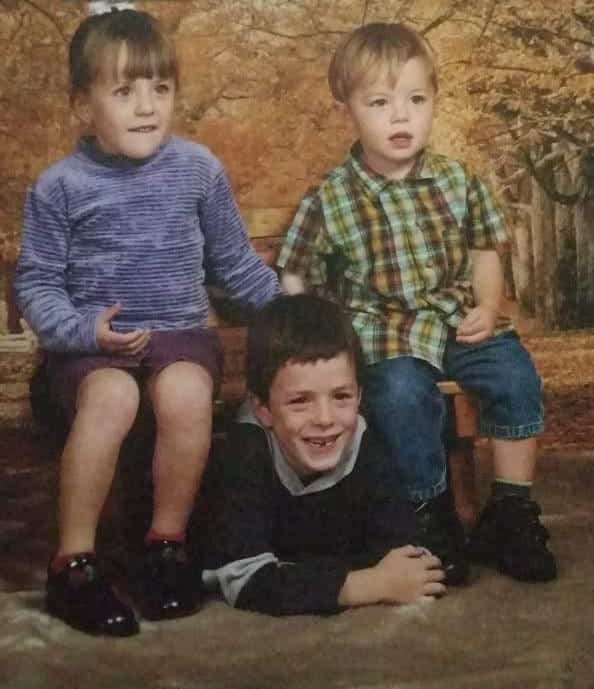
We all need strong, loving relationships in our lives. The people who cheer us on, pick us up when things go wrong, and remind us who we are. My little brother and sister, pictured with me here sometime in the early 00s, are the first people I turn to when I have news to share.
For thousands of children in the care system, those vital relationships are too often broken. Moving between different foster homes and children’s homes, and changing schools, often means leaving behind not only parents, but grandparents, brothers and sisters, and close friends. The result is that too many children lose touch with the people who know them best and matter most in their lives.
Sibling relationships are among the most important and enduring in any child’s life, and central to their sense of identity, belonging, and emotional security. Research by the Children’s Commissioner for England found that a third of children in care who have brothers and sisters are separated from them. Older children living in semi‑independent accommodation face the highest risk of being split apart.
The consequences of broken relationships can last long into adulthood, including a greater risk of poorer mental health and homelessness. These are not just statistics; they reflect the lifelong impact of denying children the strong, stable bonds that help them thrive.
Family Rights Group has long worked to reform the care system so that more children can remain safely in their families and that loving relationships are protected when children enter care.
We co-designed Lifelong Links with children and young people in care to help them find the people who matter to them and bring them together safely. Lifelong Links is now available in 42 local authorities across the UK. Over 4500 care-experienced young people have now benefited. Hundreds of brothers and sisters have been connected. Through our Build Not Break campaign, we are calling for Lifelong Links to be offered to all care-experienced children and young people, wherever they live. So every child has the opportunity to build a supportive network they can rely on throughout life.
While there is a legal duty on children’s services to allow reasonable contact between children in care and parents and certain others, siblings are not included.
Also, existing care planning regulations explicitly cover information about contact between brothers and sisters who are in the care system, but fail to explicitly include contact with siblings who remain at home or live elsewhere. We thought we’d had a breakthrough nine years ago when the then Children’s Minister pledged to fix the gap, but it was never delivered.
The issue may sound technical, but its impact is deeply human. Amber had always known she had an older sister she had never met. Her Lifelong Links coordinator eventually found her sister, Lina. Both girls describe the journey as “exciting” and “life-changing.” For Amber, meeting her sister in person was something she had always hoped for but never believed would happen.
We are working with MPs and Peers, alongside young people and our friends at Become, to strengthen the Children’s Wellbeing and Schools Bill which is currently going through Parliament. We are particularly grateful to Emma Lewell MP, Baroness Tyler and Lord Farmer for championing this cause. The House of Lords recently voted to amend the Bill to strengthen the regulations around sibling contact. MPs considered the Bill again on Monday 9th March with cross-party support, however, the amendment was disappointingly voted down. The Bill returns to the House of Lords and we will continue to campaign on this.
The Government has already pledged to introduce best practice guidance for local authorities. But guidance alone will not ensure children’s relationships are protected. We are urging the Government to go further.
As the Children’s Minister, Josh MacAlister, has said, the care system “needs to be obsessed with building lifelong loving relationships for children.” We couldn’t agree more.
Find out more about our Build Not Break campaign.
Jordan Hall, Head of Public Affairs at Family Rights Group

Your donation will help more families access expert legal advice and support from Family Rights Group.
Donate Now