By phone or email
To speak to an adviser, please call our free and confidential advice line 0808 801 0366 (Monday to Friday 9.30am to 3pm, excluding Bank Holidays). Or you can ask us a question via email using our advice enquiry form.
How to contact us for advice

Are you a parent, kinship carer relative or friend of a child who is involved with, or who needs the help of, children’s services in England? We can help you understand processes and options when social workers or courts are making decisions about your child’s welfare.
Our advice service is free, independent and confidential.
To speak to an adviser, please call our free and confidential advice line 0808 801 0366 (Monday to Friday 9.30am to 3pm, excluding Bank Holidays). Or you can ask us a question via email using our advice enquiry form.
Our online advice forums are an anonymous space where parents and kinship carers (also known as family and friends carers) can get legal and practical advice, build a support network and learn from other people’s experiences.
Our get help and advice section has template letters, advice sheets and resources about legal and social care processes. On Monday and Thursday afternoons, you can use our webchat service to chat online to an adviser.

But whether someone can access legal aid and what is available will depend on the precise situation including:
A specialist children law solicitor will be able to give advice about whether legal aid is available in your specific situation.
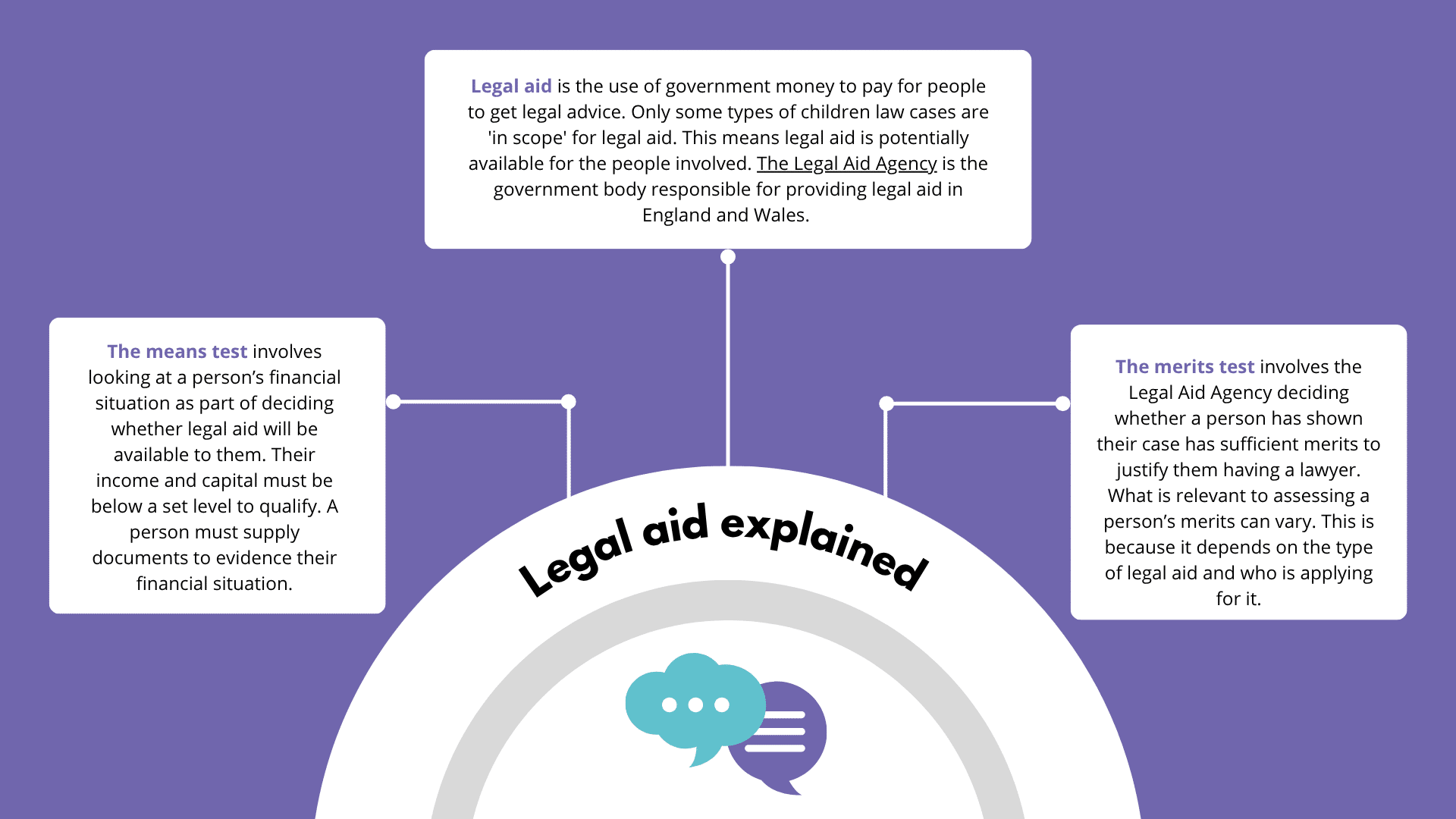
Legal aid is the use of government money to pay for people to get legal advice and representation. Only some types of children law cases are ‘in scope’ for legal aid. This means legal aid is potentially available for the people involved.
But what is available and whether someone qualifies for legal aid varies. It will depend on the individual’s circumstances and the type of case.
The Legal Aid Agency is the government body responsible for providing legal aid in England and Wales. It has to:
Families and children sometimes need to pass a means test to receive legal aid in deprivation of liberty applications. A means test involves looking at the person’s financial situation as part of deciding whether legal aid will be available to them.
A merits test involves the Legal Aid Agency deciding whether the person wanting legal aid has shown their case has sufficient merits to justify them having a lawyer to represent them. What is relevant to the assessing of merits can vary. This is because it depends on the type of legal aid they need.
Who will qualify for legal aid when a child is deprived of their liberty depends on:
Can parents get legal aid when children’s social services apply for a secure accommodation order?
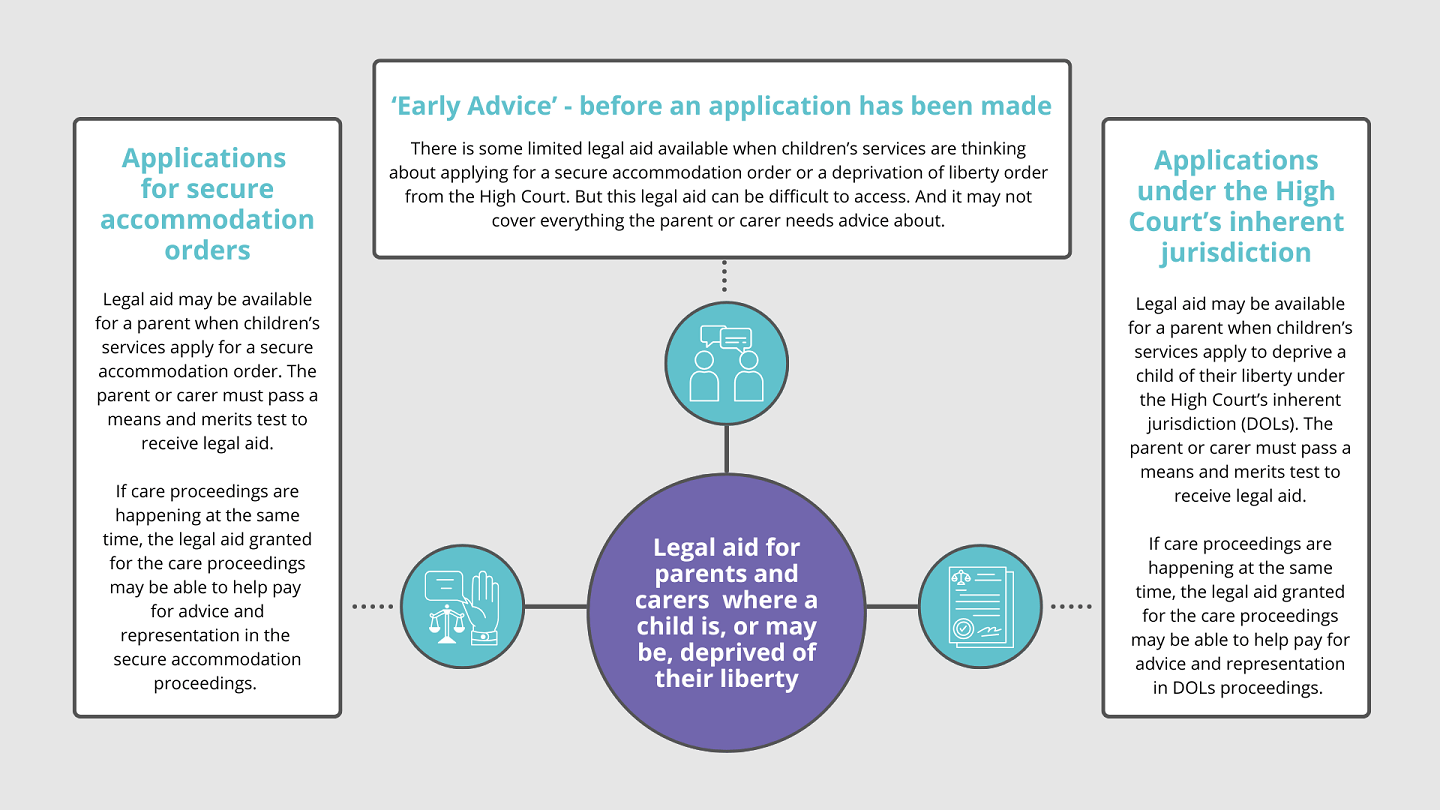
Legal aid may be available for a parent when children’s social services apply for a secure accommodation order. The parent will need to pass a means test and a merits test to receive legal aid.
If there are care proceedings happening at the same time, legal aid granted for the care proceedings may be able to help pay for advice and representation in the application for a secure accommodation order.
Can a kinship carer get legal aid when children’s social services apply for a secure accommodation order?
Legal aid may be available for a person who has parental responsibility for the child when children’s social services apply for a secure accommodation order. This includes kinship carers who have parental responsibility for the child under a child arrangements order or special guardianship order.
The person with parental responsibility will need to pass a means and a merits test to receive legal aid.
If there are care proceedings happening at the same time, legal aid granted for representation in the care proceedings can be amended to also pay for representation in the application for a secure accommodation order.
Are children entitled to legal aid when children’s social services apply for a secure accommodation order?
Yes. Legal aid is available for the child when children’s social services apply for a secure accommodation order. A child does not need to pass a means test and only a very low merits test applies. Usually, a child will receive legal aid and be legally represented.
The Family Court cannot make a secure accommodation order for a child that is not legally represented. The exception to this is where a child knows of their right to apply for legal aid, had opportunity to, but refused or failed to do so.
Can parents get legal aid if children’s social services apply for a High Court deprivation of liberty (DOLs) order?
Legal aid may be available for a parent when children’s services apply for an order under the High Court’s inherent jurisdiction (DOLs). Sometimes people use the term ‘DOLs’ or ‘DOLs orders’ as a shorthand for talking about this type of order.
The parent will need to pass a means test and a merits test to receive legal aid.
If care proceedings are happening at the same time, the legal aid granted for the care proceedings may be able to help pay for advice and representation in the deprivation of liberty (DOLs) proceedings.
Can a kinship carer get legal aid if children’s social services apply for a High Court deprivation of liberty (DOLs) order?
Legal aid may be available for a person who has parental responsibility for the child when children’s services apply for an order under the High Court’s inherent jurisdiction (DOLs). This includes kinship carers who have parental responsibility because they hold a child arrangements order or special guardianship order for the child.
The person with parental responsibility will need to pass a means and a merits test to receive legal aid.
If care proceedings are happening at the same time, the legal aid granted for the care proceedings may be able to help pay for advice and representation in the deprivation of liberty (DOLs) proceedings.
Do children get legal aid when children services apply for a High Court DOLs order?
Yes. Legal aid is available for the child when children’s social services apply for a deprivation of liberty order under the High Court’s inherent jurisdiction (DOLs). They do not need to pass a means test. A low merits test applies but a child who is the subject of the application will normally:
There is often only very limited legal aid available for families involved with children’s services to get early-stage advice. This includes when children’s social services are thinking about whether they need to apply for a secure accommodation order. Or whether to apply for a High Court deprivation of liberty order (DOLs).
A type of legal aid called ‘legal help – public law (level 1)’ may be available before an application to court has been made. The people who may entitled to this legal aid are:
‘Legal help – public law (level 1)’ legal aid usually covers:
To access this legal aid, there is a means test and merits test to pass. The merits test is: ‘is there ‘sufficient benefit’ to the person seeking legal aid, having regard to ‘all the circumstances of the case?’.
It can be difficult to access this type of legal aid. This is because there may not be many local solicitors providing this type of early advice before court proceedings have started.
A specialist children law solicitor will be able to give advice about whether legal aid is available in your specific situation.
For children there are also some extra rules which effect whether they can apply for this type of legal aid. So if a child wants to access this type of legal aid, they should speak to a solicitor to see if they are able to do this.
To find a solicitor, search using the ‘how to find a solicitor’ function on the Law Society’s website. It is important to try to find a solicitor who is a specialist in children law. Or who has Children Law Accreditation.

Your donation will help more families access expert legal advice and support from Family Rights Group.
Donate Now