By phone or email
To speak to an adviser, please call our free and confidential advice line 0808 801 0366 (Monday to Friday 9.30am to 3pm, excluding Bank Holidays). Or you can ask us a question via email using our advice enquiry form.
How to contact us for advice

Are you a parent, kinship carer relative or friend of a child who is involved with, or who needs the help of, children’s services in England? We can help you understand processes and options when social workers or courts are making decisions about your child’s welfare.
Our advice service is free, independent and confidential.
To speak to an adviser, please call our free and confidential advice line 0808 801 0366 (Monday to Friday 9.30am to 3pm, excluding Bank Holidays). Or you can ask us a question via email using our advice enquiry form.
Our online advice forums are an anonymous space where parents and kinship carers (also known as family and friends carers) can get legal and practical advice, build a support network and learn from other people’s experiences.
Our get help and advice section has template letters, advice sheets and resources about legal and social care processes. On Monday and Thursday afternoons, you can use our webchat service to chat online to an adviser.

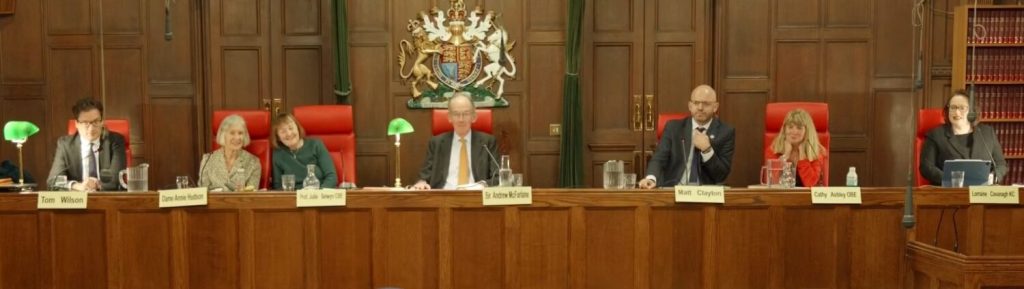
In a speech first delivered at a Family Justice Council debate on 3rd December 2025, our Chief Executive Cathy Ashley asks if the child welfare system delivers permanence for children, and whether the notion itself can break the relational security we all need.
Achieving permanence is the long-term aim for every looked after child. The aim of planning for permanence is to ensure every child has a secure, stable and loving family to support them through childhood and beyond and to give them a sense of security.
 “We all need people to turn to in our lives, emotionally and practically. Who love us for who we are. I’m going to ask today whether the system delivers permanence for children and whether the notion itself can break the relational security that we all need.
I’m going to pose four tests based on the reality of care experienced children and young people’s lives – through the prism of permanence.
One young care leaver told the charity Become it was ‘Like being on death row, counting down the days until their 18th birthday when their placements are abruptly stopped.’
In a society in which there is increasing expectation that parents will provide a home, financial and emotional support for young people well into their 30s we instead expect care experienced young people to sink or swim on their own.
Ashley John Baptiste’s book Looked After: A Childhood in Care, poignantly describes aged 17 that he had to cook his own dinners and was told he couldn’t eat the same meals as his foster family, because “he had to prepare for independence”.
Well my answer – is both.
The system talks about ‘permanence’, but for most children in the care system this is an illusion.
We now have 12,000 more children in care than a decade ago.
We sell this fantasy that we can provide permanence to children who are in the care system but that’s not the reality for many. And nor is it going to be in a system that’s overwhelmed. We have a shortage of foster carers, we have children living in children’s homes – often at huge expense – that are often far from meeting their needs, and a rising number of children deprived of their liberty.
Spending on early intervention services for families has been cut by nearly half (44%) over a decade, while spending on children in care has increased by nearly 50% in the same period.
Most families – even at pre-proceedings – aren’t offered a family group conference despite clear evidence they effectively keep children safe in their family network.
And then when a child is in the care system if permanence is understood as a fixed decision or plan, it reinforces the idea that families cannot change – closing down the possibility of returning home, even when it is safe and appropriate. Once a child is in care, the very support that families need to demonstrate change becomes harder to access, compounding this rigidity. Since 2011 the proportion of children in care returning home has fallen from 39% to 27% (2023).
Family Rights Group developed the Lifelong Links approach with the aim that children and young people in care have a lasting positive support network around them. Since 2017, over 4,000 children and young people have benefited from Lifelong Links.
Repeatedly, Lifelong Links has connected children to family or friends who they were stopped from seeing – people who really mattered to them – not stopped for safeguarding reasons but because the permanence plan was that they should have time to settle into their new foster or children’s home. And those relationships were never re-examined – even when the foster care home broke down or the child was moved again and again. It was just viewed as not important enough to matter.
Even where a child has legal permanence, in an adoption or special guardianship arrangement. Many want to have a much better understanding of who they are, where they came from.
In other words relational security fosters permanence and stability – not visa versa.
Yet, the importance of relational security is being overlooked because the system equates permanence with legal outcomes, or where a child lives.
So, instead of prioritising permanence, we should prioritise the relationships that carry a child into adulthood.
That means earlier support for families to avert crisis. It means investing in supporting more children to return home from care safely. It means exploring and supporting kinship care and for children in care we must help maintain strong connections with siblings, parents, grandparents and the community.
These relationships provide the emotional and cultural continuity that children themselves describe as the foundation of safety and belonging.”
Photo credit: Family Justice Council
May 2026

Your donation will help more families access expert legal advice and support from Family Rights Group.
Donate Now